




Join our pilot · 1,000 free kits up for grabs

Mould stains?
Urrgh.

The new, science-led way to tackle mould stains. Without the yucky bleach.

We're putting Urrgh to the test in real homes. Fancy giving it a go?

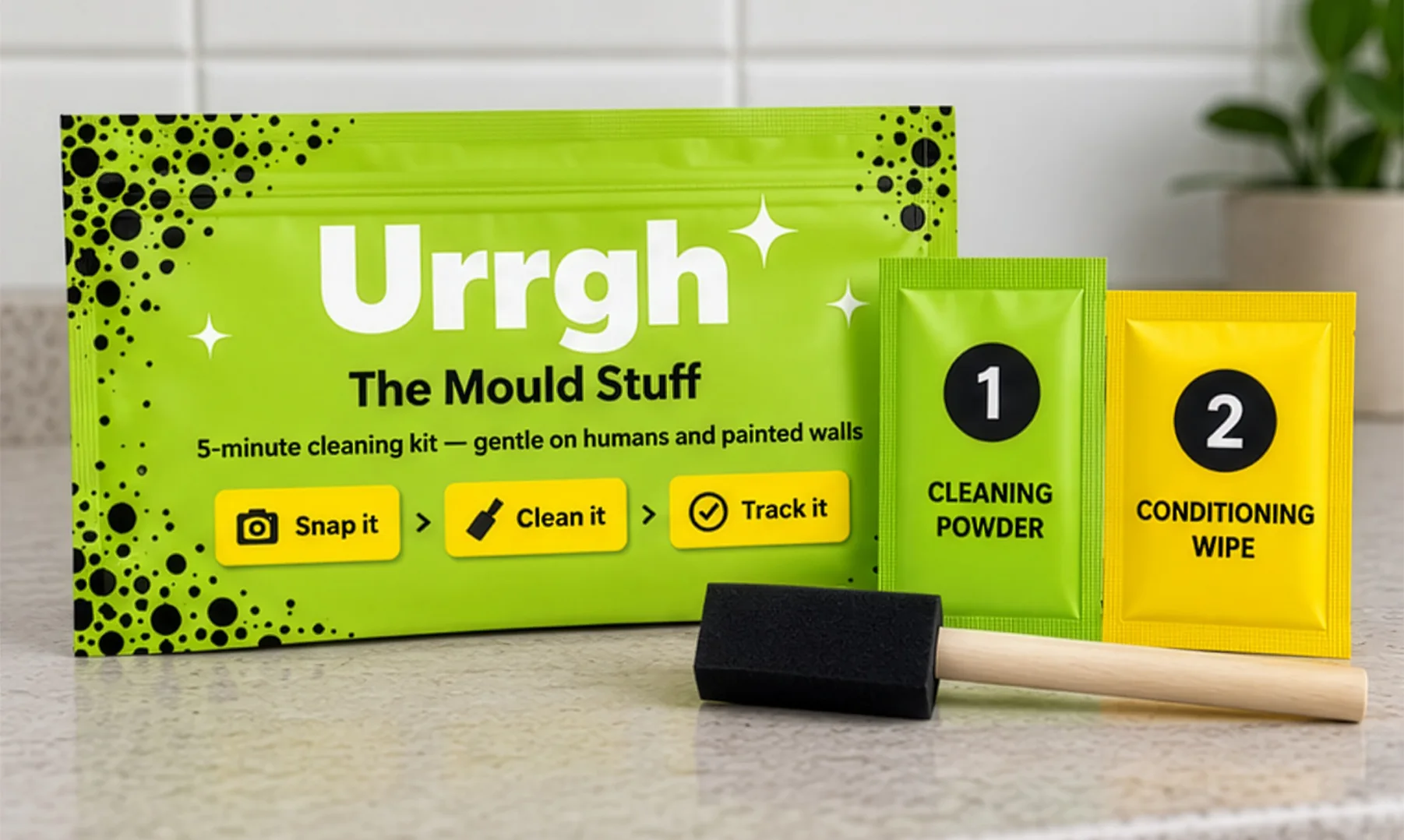
The Urrgh mould stain cleaning kit on a kitchen worktop: the pouch, a Step 1 cleaning powder sachet, a Step 2 conditioning wipe sachet and a sponge brush
  • Gentler by design
  • Deposit-friendly
  • Small kit, big difference

Real Results.
Real Evidence.

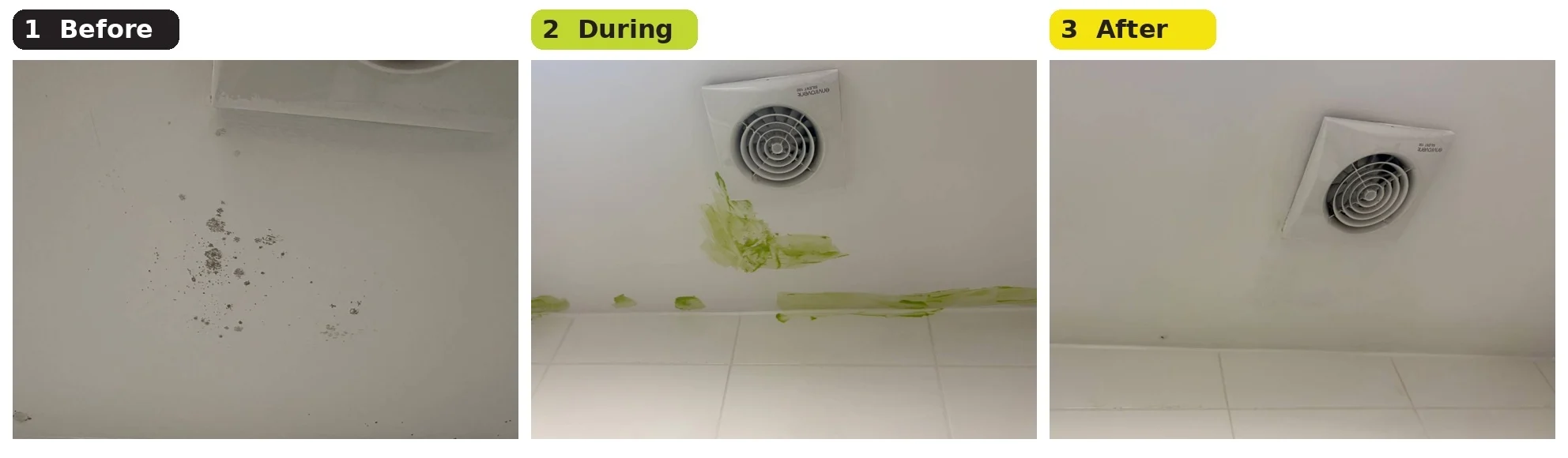
Seeing is believing. Here's what happened when we put Urrgh to work in a real bathroom.

Three photos of a bathroom wall by an extractor fan: before, with black mould spots; during, with the green Urrgh cleaning paste applied; and after, with the stains cleaned away

Bigger stain? No problem. One kit cleans a patch at least the size of one sheet of A4.

Next up: your walls. We can't wait to share before-and-afters from our pilot here.

How it works

  1. Snap it.

    Scan your kit's QR code and take a quick photo of the ugly stuff.

  2. Clean it.

    A little clever chemistry and a two-step clean.

  3. Track it.

    Capture the difference. We'll check in again after 30 days.

Watch the demo

A small, mailable kit.

Two specially developed formulations that work together. No yucky bleach.

Urrgh Step 1 cleaning powder sachet

Step 1 – The cleaning stuff

Specially formulated to loosen and lift unsightly mould stains.

Urrgh sponge brush

One handy brush

A soft sponge brush to spread the paste over the stain.

Urrgh Step 2 conditioning wipe sachet

Step 2 – The finishing touch

A conditioning wipe that leaves a fine, invisible finish on your freshly cleaned surface.

For painted walls and ceilings, wallpaper and window frames. One kit cleans a patch at least the size of one sheet of A4. Not intended for tiles, grout, sealant or freshly painted walls.

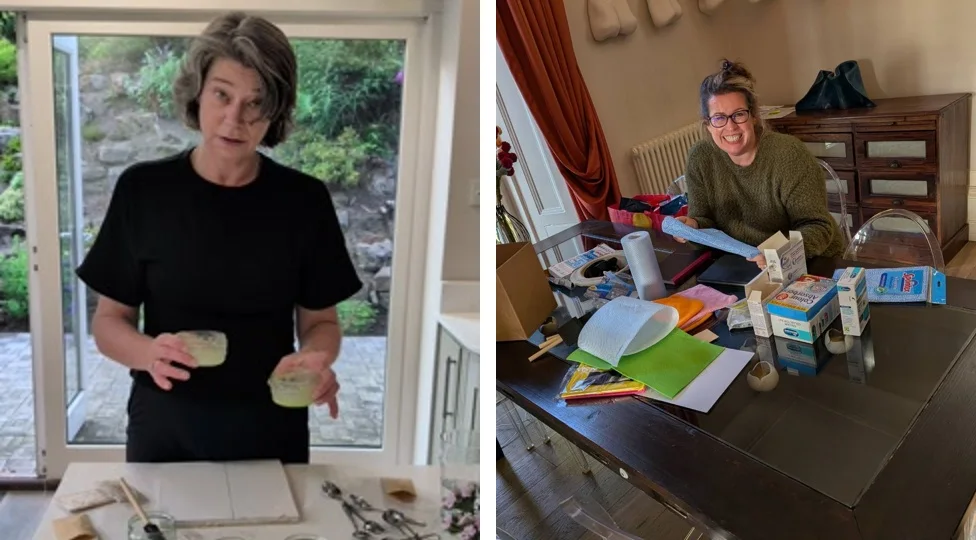
Urrgh co-founder Heleen testing formulations at her kitchen counter, and co-founder Tania surrounded by cleaning cloths and samples at her dining table
Heleen and Tania, co-founders, hard at work creating

Our story

It started with an ‘Urrgh’.

When Heleen's daughter's landlord decided to paint over the mould in her student house, she thought there had to be a better way. And she knew from painful experience that bleach wasn't the answer.

A chemistry graduate who started her career making Fairy Liquid, Heleen teamed up with fellow consultant Tania and roped in Adam, a formulation chemist.

Months of clever chemistry and kitchen-table experimentation later, Urrgh was born.

And now we'd love you to try it.

Help us make mould a little less Urrgh.

We've done the science. We've done the testing. Now it's time to see how Urrgh performs in real homes.

We're giving away up to 1,000 kits, completely free, including postage. All we ask in return is a few photos and a little feedback.

No catch. Just a small British start-up trying to do things differently.

Fancy being part of it?

Get your free pilot kit

For adults in the UK with a mould stain at home right now. You'll need to upload a photo of your mould when you apply. You'll get a dated before-and-after record you can download and keep. By applying you agree to our pilot terms and privacy notice.

For housing providers

A small, mailable kit. A smarter first response to mould complaints.

Urrgh combines a simple DIY cleaning kit with photographic evidence and a 30-day follow-up.

With new regulatory requirements around damp and mould, there's never been a better time to explore different approaches.

We're inviting housing associations, landlords, letting agents, student accommodation providers and student unions to join our pilot.

We want to understand how you manage mould complaints today and explore together how Urrgh could complement your existing processes.

Pilot kits are completely free.

The mould lowdown.

Everything you wanted to know about Urrgh, our pilot and mould at home.

About Urrgh and the pilot

Why is Urrgh different?

Many conventional mould sprays rely on bleach to tackle the dark pigmentation associated with mould. Urrgh takes a different approach. Our specially developed cleaning formulation is designed to loosen and lift unsightly mould staining so it can be wiped away, without the need for harsh oxidising chemicals.

We then go a step further with a conditioning wipe that leaves a fine, invisible finish on the cleaned surface.

What's the Step 2 wipe for?

It finishes the job. Our conditioning wipe leaves a fine, invisible film on the cleaned surface, designed to make dust and dirt easier to wipe away and help your walls stay looking cleaner for longer.

How do I clean mould stains without bleach?

Clean the stain wet rather than dry-brushing it, so you don't spread spores. On hard surfaces, the US Environmental Protection Agency recommends detergent and water, then drying completely. Urrgh's two-step kit is made for painted walls and wallpaper: a cleaning paste that loosens and lifts the stain, then a conditioning wipe to finish. Whatever you use, deal with the damp behind it too.

Can I clean mould stains off wallpaper, painted walls or window frames?

Yes. Urrgh is made for painted walls and ceilings, wallpaper and window frames. It's not intended for tiles, grout, sealant or freshly painted walls. One kit cleans a patch at least the size of one sheet of A4.

How long does it take, and what else do I need?

About 10 minutes, including 5 minutes for the paste to work. You'll need a mug or small bowl, a tablespoon of hot tap water and some kitchen roll. Full step-by-step instructions open when you scan the QR code on your kit.

Is it safe?

Use it as directed and read the instructions and safety information on the pack before you start. Keep the powder away from your eyes and keep the kit out of reach of children. Ingredient and safety information is provided on the pouch.

What about the environment?

Unlike many bleach-based mould cleaning products, which carry warnings about toxicity to aquatic life, our formulations do not require an environmental hazard warning.

What is the pilot, and why is it free?

This is a pilot, not a launch. We're giving away up to 1,000 kits to see how Urrgh performs in real homes before it goes on sale. Your photos and answers tell us what works. Nothing is for sale during the pilot.

Who can get a free kit?

Adults in the UK with a mould stain at home right now. We ask for a photo of your mould when you apply, so we can check the kit suits your surface and send kits to people who need them.

What do I have to do?

Scan the QR code on your kit, take a before photo and answer seven quick questions. Clean, take an after photo and, if you like, leave your email so we can check in after 30 days. About 15 minutes in all, with no account or password.

What happens to my details and photos?

We delete your name and address once your kit is posted. Photos and answers are filed under your kit code, not your name, and help us improve Urrgh. If you give your email, we keep it for 12 months after your last visit so you can download your record later. Read our privacy notice.

When will Urrgh be on sale?

We plan to launch in 2027. The price isn't set yet.

My kit hasn't arrived.

Kits usually arrive within two weeks. If yours hasn't, email hello@urrgh.com.

Mould at home

What causes mould in my home?

Condensation is one of the most common causes. Moisture from cooking, showers, drying clothes and breathing settles on cold surfaces, and mould grows there. Leaks, rain getting in and rising damp can cause it too. (NHS)

Is it condensation or a leak?

Condensation mould usually shows as clusters of small black dots near cold spots: window frames, corners, behind furniture and on bathroom ceilings. Damp patches with tide marks, or patches that grow after rain, point to a leak, which needs fixing at the source.

Is mould bad for my health?

Government guidance says damp and mould mainly affect the airways and lungs, and can also affect the eyes and skin. Children, older people and people with lung conditions or weakened immune systems are more at risk. If you're worried, talk to your GP or pharmacist. (GOV.UK)

How do I stop condensation?

Put lids on pans and use the extractor fan when cooking or showering. Open a window for a while afterwards and keep trickle vents open. Dry clothes outside or in a vented dryer rather than on radiators. Keep your home steadily warm, leave a gap between furniture and outside walls, and wipe condensation off windows in the morning. A dehumidifier helps in small flats. (Energy Saving Trust)

Can bleach damage painted walls?

It can. Bleach can discolour or damage wallpaper and some paints, and its fumes are unpleasant in a small room. If you use it, follow the label and never mix it with other cleaners.

How do I remove mould stains without damaging painted walls?

Go gently: no scouring pads or hard scrubbing, and don't dry-brush the mould. Use a product made for painted surfaces, follow the instructions, and leave freshly painted walls alone until the paint has fully cured. Urrgh's paste goes on with a soft sponge brush and comes off with kitchen roll.

What alternatives are there to bleach-based mould cleaners?

For hard surfaces, plain detergent and water works for routine mould cleaning, and the US EPA does not recommend bleach as a routine practice (EPA). There are also bleach-free cleaners made for walls, like Urrgh. Whichever you choose, the damp causing the mould needs dealing with too.

Can I just paint over it?

Not on its own. Paint applied over mouldy surfaces is likely to peel (EPA). Clean it first, let the wall dry, and fix the damp.

How do I clean mould stains in a rented property?

Report the mould to your landlord or letting agent in writing first, and photograph it before you clean. Small, isolated stains may be suitable for cleaning, depending on the surface and underlying cause. Cleaning doesn't replace your landlord's responsibility to find and fix the cause.

How can tenants document mould problems?

Take dated photos, one wide shot to show where it is and one close-up, and repeat them if it comes back. Keep copies of every report and reply. Pilot participants also get a downloadable before-and-after record from Urrgh.

I rent. Whose job is it to fix the cause?

Usually your landlord's, where the building causes it. The rules differ across the UK:

Scotland: since 6 October 2026, social and private landlords must investigate reports of damp or mould within 10 working days (gov.scot).

England: since 27 October 2025, social landlords must deal with significant damp and mould within fixed timescales under Awaab's Law (GOV.UK). Private renters can ask their council to inspect.

Wales and Northern Ireland have their own rules. Shelter, Shelter Scotland, Shelter Cymru and Housing Advice NI give free advice.

How can landlords manage minor mould complaints?

Respond quickly, look for the cause rather than just the stain, and keep clear records with photos and dates. Government guidance stresses that advice to tenants must never replace dealing with the underlying causes. Urrgh is designed to sit alongside that process. Talk to us about the pilot.

When is it too much to tackle myself?

If the mould covers a large area, keeps coming back, comes from a leak, or anyone at home has a lung condition, don't just clean it. Report it to your landlord or get professional advice.

This is general information, not professional advice. If you're worried about damp, mould or your health, speak to your landlord, a qualified surveyor or your GP.